 BAGTUN
Welcome ceremony instead of baptism
Celebrating your child without a church: the flow, rituals and what really counts.
Not every family wants to baptise their child. But almost every family wants to celebrate this moment. A welcome ceremony, sometimes also called a naming ceremony, gives a frame to the wonder of a new person, without a church and without a creed.
What is a welcome ceremony?
A welcome ceremony is an independent ceremony in which a child is welcomed by their family and friends. There are no fixed rules, no age limit and no conditions. It does not replace a baptism and has no legal effect. Its meaning lies entirely in the moment itself.
How does a welcome ceremony work?
For small children: short and at the right rhythm. Half an hour is enough. Schedule the ceremony at a time when your child is usually awake and content. It could look like this:
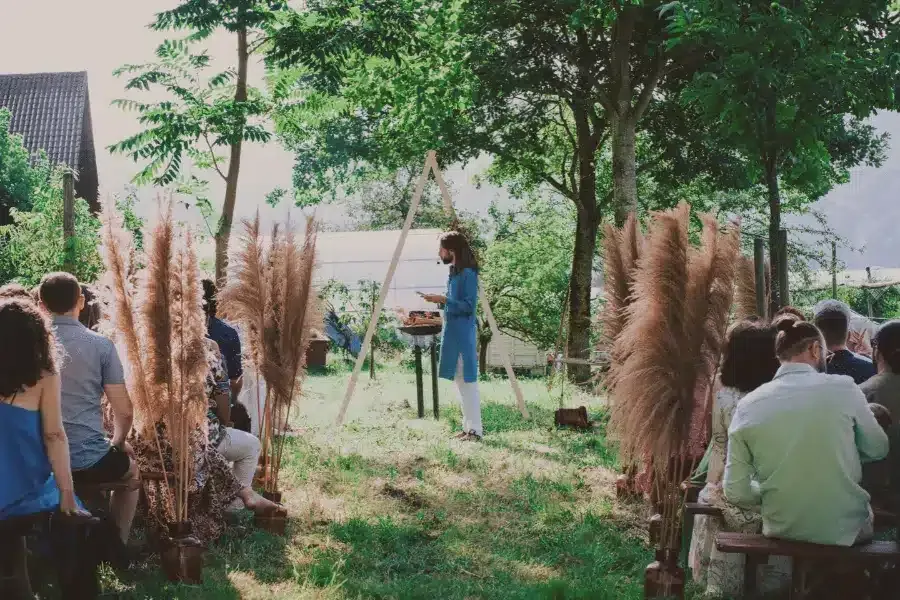
- Arriving. The guests stand in a circle. The child is in the middle, not on a stage.
- The story. How this child came to you.
- The name. Why they are called this and what it means to you.
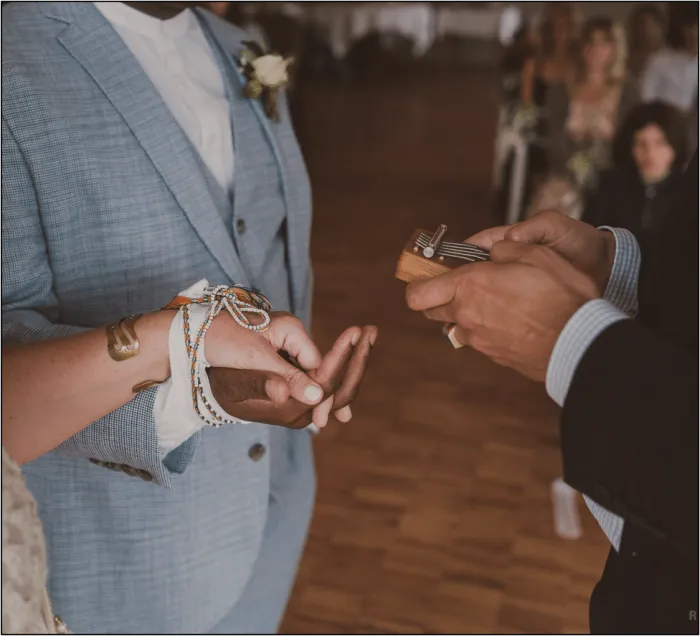
- The ritual. An action you can see and touch.
- The wishes. From parents, godparents and guests.
- The party. Coffee, cake, children in the grass.
Rituals for the welcome ceremony
A good ritual is simple and means something to you. At my ceremonies I welcome the child with the four elements this world is made of:
- Earth. A little soil from the grandparents' garden, so that they know where they come from.
- Water. A few drops from a lake or river that means something to you.
- Air. A breath taken together, a song or a sound.
- Fire. A candle that is lit again on every birthday.
If that does not suit you, there are many other ways. Popular ones are a tree you plant that grows with the child, wishes on cards the child opens at eighteen, or a book in which all the guests write.
Godparents without baptism
Yes, that works. The role is not a church office, but a promise between people. Let the godparents say in the ceremony what they want to give this child. It is often remembered more than any speech.
Where is the best place to celebrate?
Anywhere you feel at home: in the garden, on a meadow, by the lake, in the living room. Just clarify two things: where is there shade, and where can your child sleep or be changed?
When is the right time?
There is no wrong time. Many celebrate in the first year, once the first months are behind them. Others wait until the child can walk or summer comes. Older children can be welcomed too, for example when a family grows together.
Does it need a ceremony leader?
No. You can also create a welcome ceremony yourselves. Having someone accompany you is worth it if on this day you would rather be parents than organisers, and someone should hold the space so that this moment can land.
If that suits you, you will find more about the welcome ceremony at Bagtun here. Or write to me and tell me when your child wants to be celebrated.
Read on
Do you want to talk about it?
Answers are free. Warm regards, Timo