 BAGTUN
A funeral without a priest
Holding the threshold open: what a non-religious farewell ceremony can look like.
If you are reading this, you may have just lost someone. Then the first thing is: you do not have to decide everything today. Much of what feels urgent can wait a day. This text is meant to help you sort the most important questions.
What is a non-religious farewell ceremony?
A non-religious farewell ceremony, also called a secular funeral or celebration of life, is a ceremony without a church framework. It is not led by a priest or pastor, but by a funeral celebrant, a ceremony leader or by the family themselves. It suits people who have left the church, who never belonged to one, or whose life would not find itself in a liturgy.
Is that possible in Switzerland?
Yes. A funeral service is not tied to a church. The rules for cemeteries, burials and funeral halls are set by municipalities and cantons, so they vary from place to place. Ask the funeral office of your municipality or the funeral home directly whether a room can be used and which times are possible.
What needs to be done first?
The order differs from place to place. It usually looks like this:
- The death is confirmed. A doctor issues the necessary certificate.
- The death is registered. With the funeral or civil registry office of the municipality, often the funeral home helps.
- The burial is decided. Grave, urn, communal grave or a place in nature, where permitted.
- The ceremony is planned. It does not have to take place at the same time as the burial.
The last point surprises many people. A farewell ceremony can also take place weeks later, in a place that suits this person.
How does a non-religious funeral service work?
Most ceremonies last between half an hour and a full hour. A possible order:
- Arriving. Music, silence, a picture, a candle.
- Welcome. Naming why we are here.
- The life. The life story, not as dates but as a story.
- Voices. Whoever wants to says something or has something said.
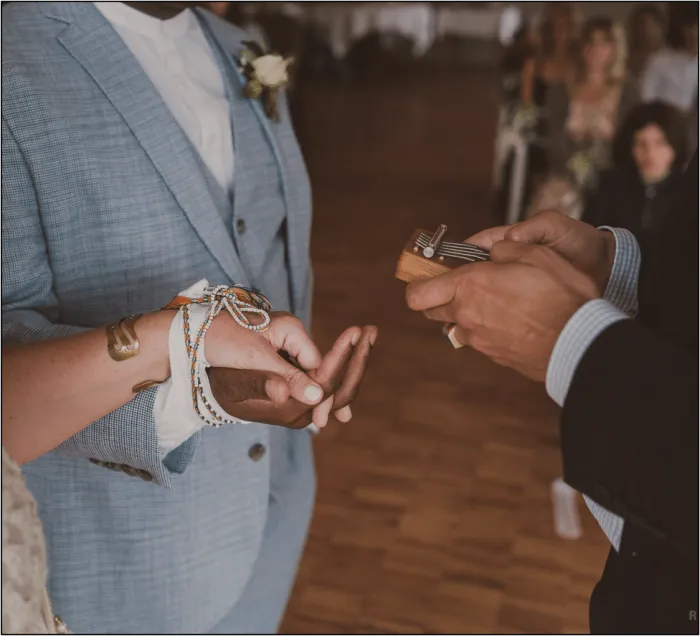
- A ritual. Flowers, earth, a stick in the fire, a glass raised to life.
- Silence. A minute that is not filled.
- Thanks and invitation. Often to a shared meal.
Why silence is the hardest part
A farewell lasts longer than a funeral service. That is why I do not try to offer mourners comfort. I offer them time. Silence in a room full of people is the hardest thing I have learned. Nobody knows what to do with their hands. But exactly there, what no speech can say arrives.
How do I find the right words?
You do not need to be able to write a speech. It is enough to tell: How did this person walk into a room? What did they always say? What did you have to laugh about, even when it was annoying? What is missing at the kitchen table now? A good speech does not gloss over anything. It shows the person as they were, so that those present recognise them.
May I speak myself?
Yes, and it is okay if your voice breaks. If you are unsure, write the words down. Then someone else can read them in your place. Laughter has its place too, more on that in the text Is it okay to laugh at a funeral?
If you are looking for someone to accompany you, you will find more about the farewell ceremony at Bagtun. You can also reach me at short notice by phone or message.
Read on
Do you want to talk about it?
Answers are free. Warm regards, Timo